Claim
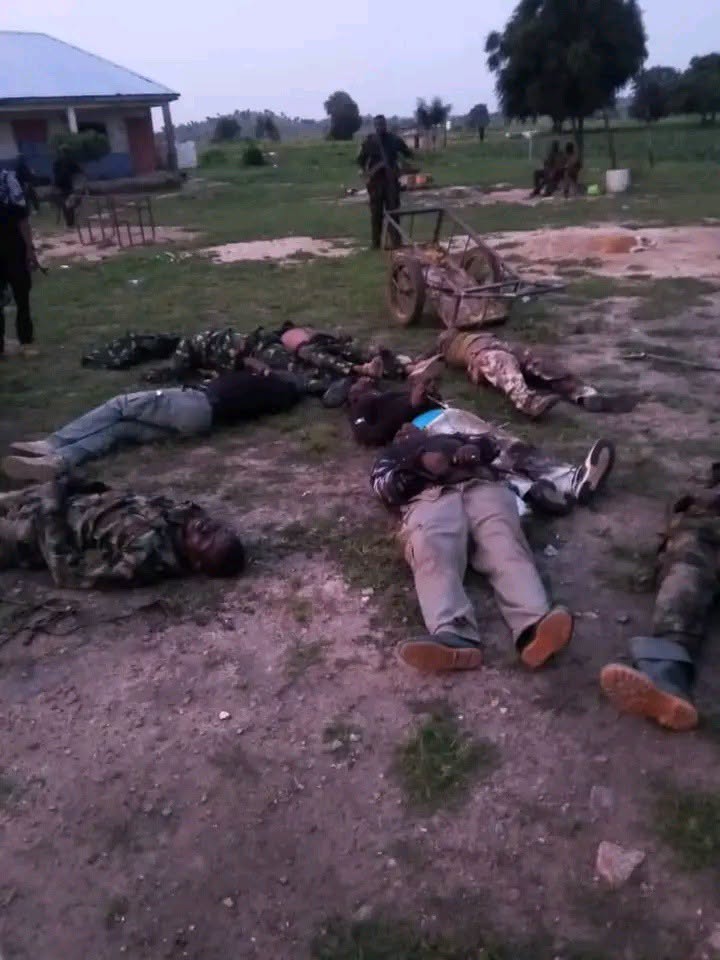
A Facebook post published by Hausaland Magazine carried the headline: “BREAKING NEWS: FULANI TERRORISTS MASSACRE NIGERIAN SOLDIERS, CIVILIANS IN SOKOTO.”

The post alleged that armed men described as Fulani terrorists attacked a community identified as “Garin Gobir Gindin” in Sokoto State, killing more than 100 civilians, 10 Nigerian soldiers and a Mobile Police officer, while abducting several others.
The post also claimed that the death toll was rising, presenting the alleged incident as a major attack on civilians and security personnel.

Why We Checked
CEMESO decided to fact-check the claim because allegations of mass killings could cause public panic, heighten ethnic tensions and spread misinformation, particularly in communities already affected by insecurity.
The post attributed the alleged attack to an ethnic group and reported a high number of casualties. Given the seriousness of these allegations, CEMESO sought to establish whether the incident occurred and whether the reported casualties could be independently verified.
Verification
CEMESO reviewed reports from credible news organisations and examined statements from the Nigerian Army and the Sokoto State Police Command concerning the alleged attack.
A report published by Daily Post Nigeria stated that both security agencies had dismissed the claim that more than 100 civilians, 10 soldiers and a Mobile Police officer were killed in the alleged attack in Sokoto State. .
According to the report, Lieutenant Colonel Olaniyi Osoba, Acting Deputy Director of Army Public Relations at the Nigerian Army’s 8 Division and Sector 2, Operation FANSAN YAMMA, denied that an attack involving the reported mass casualties had occurred in the state.
Similarly, Ahmed Rufai, the spokesperson for the Sokoto State Police Command, dismissed the allegation, stating that the incident did not occur in Sokoto.
Further checks raised questions about the location mentioned in the viral post. The alleged community, identified as “Garin Gobir Gindin”, could not be verified through the geographical records and community gazettes examined during the investigation.
A reverse-image search of the photograph accompanying the viral post also failed to establish a credible connection between the image and the alleged attack in Sokoto State.
Additionally, searches of credible media reports did not identify independent evidence confirming the alleged mass killing or the reported number of casualties.
However, the absence of media coverage alone does not prove that an incident did not occur. In this case, the denials by the relevant security authorities, the inability to verify the alleged location and the lack of corroborating evidence collectively undermine the claim.
It is important to distinguish this allegation from other security incidents that may have occurred in Sokoto State. The existence of insecurity in the state does not establish that the specific mass-casualty attack described in the viral post took place.
Worthy of note is the identification of an inconsistency in the date provided in the viral post. The post stated that the alleged incident occurred on Tuesday, 5 October 2026. However, a calendar check shows that 5 October 2026 falls on a Monday, not a Tuesday. This discrepancy raises further questions about the accuracy of the information circulated in the post. Although an incorrect day of the week does not, on its own, prove that an incident did not occur, it adds to the inconsistencies identified during the verification process.
Verdict
FALSE.
The claim that Fulani terrorists killed more than 100 civilians, 10 Nigerian soldiers and a Mobile Police officer in an attack on “Garin Gobir Gindin” in Sokoto State is false.
The Nigerian Army and the Sokoto State Police Command denied that the alleged attack occurred, and the investigation found no credible evidence supporting the reported massacre or casualty figures.
Conclusion
The circulation of unverified reports of mass killings, particularly those attributing violence to an ethnic group, can heighten tensions and contribute to hostility between communities.